

Publications
This list is retrieved automatically from NVA, the Norwegian Research Archive (Nasjonalt vitenarkiv), for the principal investigators of the research group. Current and former members of the research group are shown in bold.
2026 · 2025 · 2024 · Pre-Battery Coast
2026
-
Influence of the Electrolyte Amount on the Aging Behavior of 4695 Lithium-Ion Batteries
Highlights of this paper
In short
This study asks how much electrolyte a cylindrical 4695 cell needs. The cells have a high-nickel NMC cathode and a graphite-silicon anode. Eight pore filling ratios (PFR) were compared, from pores that are about half filled to fully saturated pores with additional free electrolyte. All cells went through 720 cycles of accelerated ageing between 0 % and 80 % state of charge at 50 °C and 0.5 C.
Main results
- Despite large differences in the electrolyte amount, all cells show remarkably similar capacity fade and resistance increase during the cyclic ageing.
- In the subsequent fast-charging tests, cells with a very low or a very high PFR lose capacity quickly and show higher resistance because of lithium plating. For a high PFR this is attributed to electrolyte motion induced salt inhomogeneity (EMSI), for a low PFR to the higher resistance of incompletely wetted electrodes.
- Cells with an intermediate PFR keep a stable fast-charging performance.
- Moment of inertia measurements were used for the first time to follow the electrolyte amount over the cycle life.
Practical meaning
- The best electrolyte amount depends on the ageing conditions, so it has to be chosen with the long-term durability of the cell in mind.

Figure 7 of Zimmermann et al., JES 173 (2026). CC BY 4.0. -
Highlights of this paper
In short
Electrolyte motion induced salt inhomogeneity (EMSI) is a critical degradation mechanism that can limit the lifetime of large-format lithium-ion cells. Here, the distribution of the electrolyte salt across entire electrodes taken from 18650 cells is mapped with scanning micro X-ray fluorescence (µ-XRF). The usual salt LiPF6 is replaced by lithium hexafluoroarsenate (LiAsF6), because the arsenic in it can be detected well by X-ray fluorescence and indicates the local salt concentration.
Main results
- Calculations with the Advanced Electrolyte Model show that the transport properties of LiAsF6 closely match those of LiPF6 in relevant carbonate solvents, so it is a suitable stand-in salt.
- The arsenic maps reflect the real salt concentration: they grow and relax with cycling and rest, and the patterns agree across the separator, the anode and the cathode, which points to a redistribution of salt in the whole cell.
- Before cycling the salt is nearly uniform; after 15 and 30 cycles pronounced, inhomogeneous gradients develop along the width and along the winding direction, and after 5 and 30 days of rest they relax substantially.
- Along the whole anode the salt gradient is strongly non-uniform. The maps show bands that follow the cell tab and locally salt-depleted regions below the tab, interpreted as signs of pressure-dependent electrolyte pumping and of the tab influencing the EMSI effect.
Practical meaning
- µ-XRF mapping of LiAsF6 is a new way to quantify the salt distribution in electrodes with high spatial resolution.

Figure 5 of Bakhshi et al., JES 173 (2026). CC BY 4.0. -
Highlights of this paper
In short
Fast charging is limited by slow lithium diffusion in the active particles and by limited ion transport in the electrolyte. This work proposes a design method for graphite anodes with more control over the particle shape. Particles of different shapes are generated by computer-aided design from FIB-SEM images of artificial graphite and assembled to three-dimensional electrodes at the mesoscale. A 4D (space and time) electrochemical simulation then shows how particle shape, packing and pore connectivity control the lithium transport, the lithiation and the rate capability.
Main results
- For electrode volumes of 30 × 30 × 66 µm and four particle populations (for example thin flakes of about 7.3 × 14.9 × 3.9 µm), the simulation gives an average state of lithiation of about 80 % at 1 C, with a clear gradient through the thickness.
- At 3 C and 5 C the ionic heterogeneity and the capacity loss increase substantially.
Practical meaning
- The method delivers maps of the state of lithiation, the ion flux and the rate performance, to choose particle shapes and electrode structures for fast charging, and to guide experiments and scale-up for anode manufacturing.
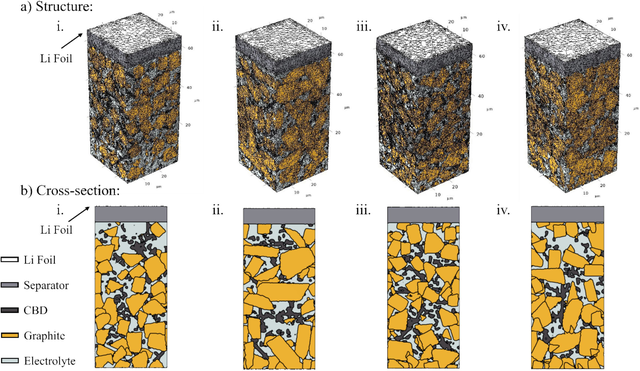
Figure 3 of Gong et al., J. Energy Storage 178 (2026). CC BY 4.0. -
Highlights of this paper
In short
Pouch cells with high-nickel NMC cathodes were aged by cycling with full and partial state-of-charge windows and by storage. The cathodes mix single-crystalline (SC) and polycrystalline (PC) particles in different ratios. Capacity, pseudo open-circuit voltage, impedance and, for harvested electrodes, impedance and the galvanostatic intermittent titration technique were used to follow the ageing.
Main results
- Cycling between 0 and 100 % state of charge accelerates the capacity fade. Cycling at both high and low states of charge has detrimental combined effects, including growing impedance and a pronounced splitting of the H2-H3 plateau.
- Restricting the state-of-charge window mitigates the degradation significantly. Storage at 100 % state of charge does not split the plateau.
- Single-crystalline electrodes keep stable voltage profiles and a low impedance rise; polycrystalline electrodes show a marked overpotential increase and plateau shifts. Blends age heterogeneously, which shows as plateau splitting.
Practical meaning
- The ratio of single-crystalline to polycrystalline material strongly influences how a cathode ages, in addition to the charge window used.

Figure 2 of Düsdieker et al., JES 173 (2026). CC BY 4.0. -
Highlights of this paper
In short
The ageing of LFP/graphite pouch cells was compared in cycling and in storage at high temperature. Three different artificial graphites were combined with two lithium salts, LiPF6 and LiFSI. Parasitic reactions were followed by gas evolution and isothermal microcalorimetry, and the cycling and storage data were fitted with a lifetime model based on SEI growth and iron deposition on the negative electrode.
Main results
- Capacity retention is worse for cells stored at 100 % state of charge than for cycled cells, and the trends over the graphites and electrolytes are the same for both.
- The model describes the cycling data well but the storage data poorly.
- Parasitic reactions that come only from the negative electrode correlate well with the lifetime of the cells, in cycling as well as in storage.
Practical meaning
- Measuring the parasitic reactions at the negative electrode gives an early indication of the lifetime of LFP/graphite cells.
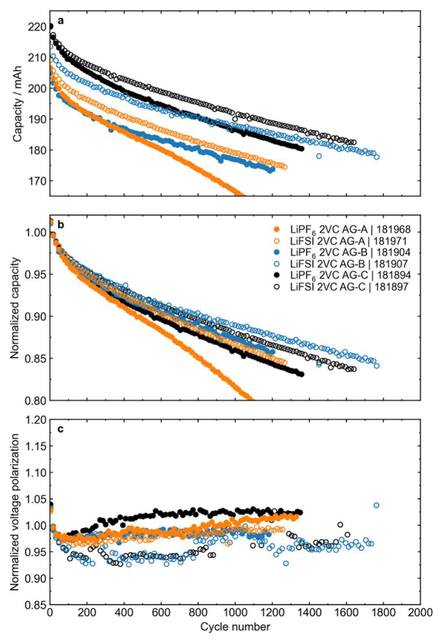
Figure 1 of Logan et al., JES 173 (2026). CC BY 4.0. -
Highlights of this paper
In short
Computer simulations of batteries are often too complex to be used by the people who run the experiments. BattScape is a library for MATLAB Simscape in which a battery model is put together from building blocks, like LEGO: the model is dragged and dropped instead of programmed. Experimentalists can in this way assemble a digital twin of their own measurements.
Main results
- Checked against the established simulation software COMSOL Multiphysics for identical cells: the voltage differs by 0.4 mV on average, even at a charge rate of 5 C.
- Runtime is about 130 s instead of about 10 s in COMSOL for runs shorter than 3 minutes, still fast enough for a digital twin of an experiment.
- Three examples show the flexibility: a perfect lithium counter electrode, a blended electrode with two active materials, and a simplified ageing mechanism used to adjust the operation of an aging battery so that lithium plating is avoided.
Practical meaning
- It speeds up battery design and development cycles.
- Highly accurate results are obtained on a normal laptop.
- No IT specialist and no very expensive licences are needed to run and modify simulations.
- Comparing simulations with experiments helps to identify experimental artifacts, as a digital twin of the cell.
- A digital twin could be offered together with a physical battery.

Figure 3 of Pakuła et al., JES 173 (2026). CC BY 4.0. -
Highlights of this paper
In short
In large lithium-ion cells the electrolyte can be moved by the cycling of the cell itself, so that the dissolved conducting salt (LiPF6) ends up unevenly distributed. This electrolyte motion induced salt inhomogeneity (EMSI) was described for large-format cells in 2024. Here the effect is shown for the first time in a publicly available commercial cell, the 18650 cell SDI 35E, cycled at 0.1 C to 0.9 C for up to 150 cycles and opened afterwards to measure the salt concentration.
Main results
- The salt gradient between the edges of the electrode roll and its axial mid-plane develops within the first 50 to 100 cycles and then stays constant.
- The faster the cell is cycled, the larger the gradient.
- At 0.7 C and 0.9 C the gradient leads to stripes of lithium plating at the edges of the electrode roll and to faster capacity loss.
- The salt concentration can be measured with a simple method: the conductivity of the extracted electrolyte, which needs only a conductivity probe.
Practical meaning
- Ageing caused by the EMSI effect is very sensitive to the charge rate.

Figure 5 of Kvalsund et al., JES 173 (2026). CC BY 4.0. -
Highlights of this paper
In short
Electrolyte motion induced salt inhomogeneity (EMSI) is increasingly recognized as a failure mode in fast charging, but it was unclear whether it only occurs in large jelly-roll cells. This work shows the effect for the first time in single-layer pouch cells. It occurs whenever two conditions coincide: a pore volume that shrinks on charging with a pore filling ratio above 1, and a strong salt polarization through the cell.
Main results
- The known fingerprint is reproduced: a reversible, week-long rise in ohmic resistance together with rate-dependent capacity loss. It is used as a diagnostic marker.
- Ion chromatography and infrared spectroscopy map LiPF6 gradients on the centimetre scale, up to about three times higher in the centre than at the edge over 2.5 cm after about 20 equivalent fast-charge cycles.
- The gradients need almost a week to disappear and coincide with lithium deposition at the edge.
- A coupled pseudo-3D electrochemical and fluid model reproduces the trends. Parameter scans of electrolyte amount, rate, temperature and silicon content show when the effect sets in and suggest ways to mitigate it.
Practical meaning
- EMSI is a general design and testing challenge for all cell formats in which the electrode stack is mechanically constrained.

Figure 2 of Hsiao et al., JES 173 (2026). CC BY 4.0.









2025
-
Highlights of this paper
In short
All-solid-state batteries could store more energy than batteries with liquid electrolyte. Here, an operando cell for tender X-ray photoelectron spectroscopy (XPS) was developed to follow the interface between a nickel-rich layered oxide cathode and the solid electrolyte Li6PS5Cl during the first charge and discharge cycles. The cell performance was first validated against a conventional pouch cell under high compression.
Main results
- On the first charge to about 3.3 V versus Li, the solid electrolyte starts to decompose into LiCl, Li3PS4 and polysulfides, increasingly with potential.
- Above about 3.8 V, sulfate and sulfite impurities decompose. At about 74 % state of charge (about 4.10 V) the surface of the cathode particles reconstructs because lattice oxygen is released.
- Beyond about 4.6 V the sulfur signal decreases, which suggests that elemental sulfur forms and is lost by sublimation into the vacuum.
Practical meaning
- The potentials at which the cathode and the solid electrolyte start to react set the electrochemical stability window of the cell.

Figure 1 of Wilhelm et al., ACS Appl. Mater. Interfaces 17 (2025). CC BY 4.0. -
Highlights of this paper
In short
This study looks at the effect of the electrolyte amount on the electrical performance of new high-energy cylindrical 4695 cells. The pore filling ratio (PFR) is the ratio of the electrolyte volume to the pore volume of anode, cathode and separator. It ranges from roughly half-filled pores to completely filled pores with additional free electrolyte.
Main results
- Energy and resistance stay constant as long as the PFR at 100 % state of charge is above 1.00. Below 1.00 the energy decreases and the resistance increases with falling PFR.
- Moment of inertia measurements are shown to be a complementary technique to validate the PFR calculations.
- An analytical equation relates the electrolyte mass pushed out of the jelly roll to the measured change of the moment of inertia.
Practical meaning
- The study is the basis for a follow-up on how the electrolyte amount influences the ageing of cylindrical cells.

Figure 5 of Zimmermann et al., JES 172 (2025). CC BY 4.0. -
Data-Driven Entropy Coefficient Estimation for Large Format Lithium-Ion Batteries
2024
-
Highlights of this paper
In short
The overpotentials of a cell limit its energy and power, but under changing operating conditions and with complicated ageing it is hard to say where they come from. Here the overpotentials are estimated for a dataset of aged and non-aged commercial lithium iron phosphate/graphite cells cycled under fast charging. A pseudo-two-dimensional (P2D) model and the discharge profiles of the first 630 cycles are used to follow the sources in the cells with the longest, median and shortest life.
Main results
- An analytical expression splits the total overpotential into a lithium concentration, an electrolyte concentration, an ohmic and a kinetic part.
- The major source of overpotential is the loss of lithium inventory and the loss of active material during cycling.
Practical meaning
- Combining large datasets with physics-based models makes it possible to learn from the overpotentials of complex electrochemical systems.

Figure 1 of Appiah et al., J. Energy Storage 84 (2024). CC BY 4.0. -
Highlights of this paper
In short
Pouch cells with a spinel LiMn2O4 (LMO) positive electrode and an artificial graphite negative electrode were tested under varying conditions to understand their degradation. Manganese dissolves from the positive electrode and deposits on the graphite right after formation.
Main results
- The deposition is strongly suppressed when the formation cycle is run at -10 °C and the upper cut-off voltage is limited. A formation cycle at 70 °C greatly increases the manganese deposition and the gas generation after a single cycle, with long-term effects.
- The advantage of cold formation disappears when all cells are cycled at 40 °C: the cycle life is similarly poor (60 to 200 cycles) whatever the formation conditions.
- In an isothermal microcalorimeter, fully lithiated graphite from cells with more manganese gives more parasitic heat flow from electrolyte reduction and delithiation.
Practical meaning
- Manganese on the negative electrode compromises the passivation of the anode and makes lithiated graphite react faster with the electrolyte, which accelerates the loss of lithium and so the failure of the cell.

Figure 9 of Zsoldos et al., JES (2024). CC BY 4.0. -
Highlights of this paper
In short
The energy and power of a lithium-ion battery depend strongly on the active materials and on the electrode design parameters. Experiments on all design variants are expensive, so a continuum model is used instead. For a cell with an LiFePO4 cathode, a Li4Ti5O12 anode and a porous separator, an experimentally validated pseudo-two-dimensional model explores how the cell design affects the discharge capacity at different rates, and a two-dimensional simulation shows the lithium-ion concentration in the electrode at high currents.
Main results
- The slow diffusion in the electrolyte is the main factor that limits the performance of thick electrodes at high currents.
- The Li4Ti5O12 anode is the limiting electrode.
Practical meaning
- The results guide and speed up the optimization of the electrode architecture.

Figure 6 of Appiah et al., Electrochim. Acta 494 (2024). CC BY 4.0.
Pre-Battery Coast
Papers from 2016 to 2021, published before the first papers with a UiA affiliation.
2021
-
Monitoring SEI Formation on Graphite Electrodes in Lithium-Ion Cells by Impedance Spectroscopy
Highlights of this paper
In short
When a lithium-ion cell is charged for the first time, a thin protective layer, the solid electrolyte interphase (SEI), forms on the graphite anode. Its resistance is hard to measure with impedance spectroscopy because it overlaps with the charge-transfer resistance. The idea here is to measure at 0 % state of charge (graphite at about 2 V versus Li+/Li), where the charge transfer is practically switched off and the SEI resistance can be isolated. Four electrolytes were compared: a standard one (LP57) and LP57 with 1 wt% of the additives VC, FEC or DiFEC.
Main results
- The SEI resistance can be extracted from impedance spectra in these blocking conditions; at 40 % state of charge SEI and charge-transfer resistance cannot be separated.
- LP57 with FEC forms the most stable SEI, with a very low resistance and the lowest activation energy, which explains why FEC is a favourable additive at low temperatures.
- A potential-controlled cycling procedure shows when the SEI resistance appears during formation: at the reduction potentials of the respective electrolyte.
Practical meaning
- The method is a tool to study film formation on lithium-ion anodes.
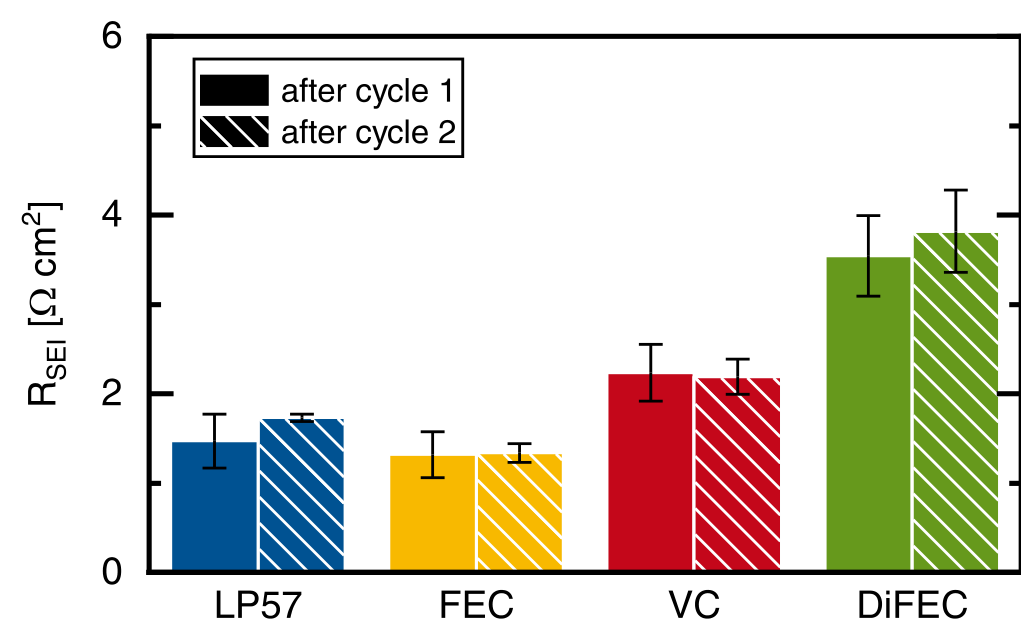
Figure 7 of Solchenbach et al., JES 168 (2021). CC BY 4.0. -
Highlights of this paper
In short
Sodium-ion batteries are a candidate to complement lithium-ion technology, and most research looks for new active materials. How fast such a battery can be charged and discharged, however, is also determined by the ion transport in the electrolyte. Here the four key transport and thermodynamic properties (conductivity, diffusion coefficient, thermodynamic factor and transference number) were measured for 0.1 M to 2 M LiPF6 and NaPF6 in a mixture of ethylene carbonate and diethyl carbonate and used in one-dimensional simulations.
Main results
- The larger sodium ion and its weaker interaction with the solvent are beneficial for high-power applications.
- With the improved ion transport of the sodium electrolyte, either the charge and discharge currents or the electrode loading could be increased substantially compared with the lithium system.
Practical meaning
- Power density, not only energy density, decides whether a new cell chemistry is useful.
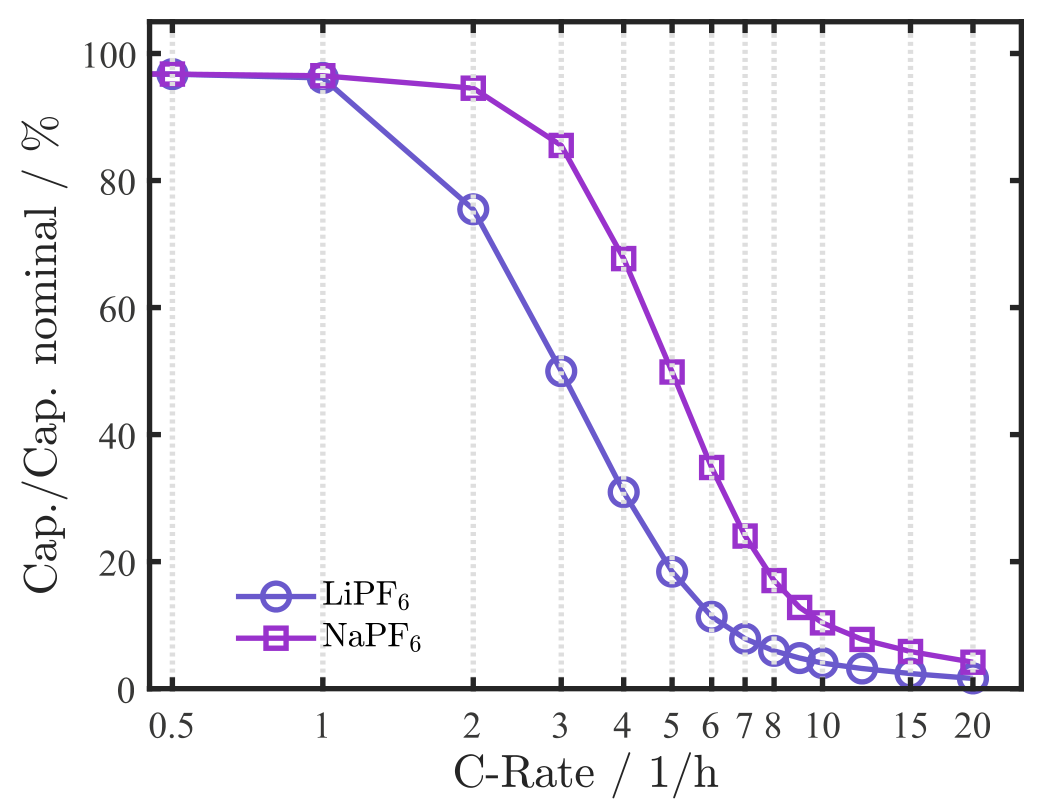
Figure 7 of Landesfeind et al., JES 168 (2021). CC BY 4.0.
2019
-
Highlights of this paper
In short
Battery performance at low temperatures or at fast charging is determined by how well the ions move in the electrolyte. The four key properties are the ionic conductivity, the diffusion coefficient, the transference number and the thermodynamic factor. They were measured over a wide range, from -10 to +50 °C and from 0.1 to 3.0 M, for two common electrolytes (EC:DMC and EC:EMC) and one electrolyte without ethylene carbonate (EMC:FEC). A new analysis scheme for the transference number and the thermodynamic factor was introduced.
Main results
- The results are given as approximate relations that can be used directly in numerical battery models.
- Compared with the scarce literature data, earlier descriptions of the dependence on concentration and temperature do not reflect the complexity of the ion transport.
Practical meaning
- Imprecise transport data are likely to lead to wrong predictions of the power limits of a lithium-ion battery or of the onset of lithium plating.

Figure 1 of Landesfeind et al., JES 166 (2019). CC BY-NC-ND 4.0, shown unchanged. -
Identifying Contact Resistances in High-Voltage Cathodes by Impedance Spectroscopy
Highlights of this paper
In short
Cathodes made of LNMO, a high-voltage material, lose capacity quickly when cycled against graphite at elevated temperature, and the impedance of the cathode rises. In the literature this is often blamed on a surface film on the cathode. This study shows that the main reason is a contact resistance between the aluminium current collector and the cathode coating.
Main results
- Temperature-dependent impedance measurements and pressing the electrode stack together point to an electronic origin of the high-frequency impedance feature.
- When the cathode is coated on a glassy carbon disk instead of aluminium, the impedance increase does not appear: it arises at the interface to the aluminium.
- In cells cycled with deliberately added HF a contact resistance develops, without HF it does not.
Practical meaning
- A rise in impedance should not be taken as evidence for a cathode film without excluding the contact resistance.

Figure 7 of Pritzl et al., JES 166 (2019). CC BY-NC-ND 4.0, shown unchanged. -
Highlights of this paper
In short
This Comment concerns the paper "Direct Electrochemical Determination of Thermodynamic Factors in Aprotic Binary Electrolytes" (2016). The authors revisit the central assumption of that paper: that the activity coefficient of the ferrocenium salt is independent of its surroundings. Following the Debye-Hückel theory it depends on the ionic strength of the electrolyte, and published measurements cannot support the assumption.
Main results
- The authors conclude that the basic premise of the proposed method was incorrect and that the method is therefore invalid.
- They also describe experimental attempts to check the method, for the interested reader.
2018
-
Highlights of this paper
In short
The tortuosity says how winding the path of the ions through the porous electrode is. Values measured by impedance spectroscopy in symmetric cells are usually higher than values calculated from 3D X-ray tomography. This work tests the assumptions behind the electrochemical method and then compares both methods on electrodes from the same coating.
Main results
- The influence of the electronic resistance of the electrode is analysed, and a simple criterion shows when the model can be used.
- A macroscopic model electrode made of densely packed steel spheres with known tortuosity proves that the impedance method returns the true tortuosity.
- The binder, which most tomography experiments do not image, is the key reason why tomography underestimates the tortuosity.
Practical meaning
- Tortuosity is a central parameter for the performance of electrodes at high charge and discharge rates.

Figure 6 of Landesfeind et al., JES 165 (2018). CC BY-NC-ND 4.0, shown unchanged. -
Method to Determine the In-Plane Tortuosity of Porous Electrodes
Highlights of this paper
In short
Several methods exist to determine the tortuosity of an electrode in the direction through the coating, but hardly any for the direction along the coating. A new cell design restricts the ion transport to the in-plane direction, so that the in-plane tortuosity can be measured by impedance spectroscopy and analysed with a transmission-line model. Validation experiments show that the method works and is robust.
Main results
- The cell design and the analysis were tested with simulations and with experiments on graphite electrodes.
Practical meaning
- The in-plane tortuosity is a tool for designing, characterising and modelling three-dimensional battery architectures such as laser-structured electrodes, and helps to estimate how properties like porosity, tortuosity and binder content are distributed through the thickness.

Figure 1 of Suthar et al., JES 165 (2018). CC BY-NC-ND 4.0, shown unchanged. -
Influence of the Binder on Lithium Ion Battery Electrode Tortuosity and Performance
Highlights of this paper
In short
The speed at which a graphite anode can be charged is limited by lithium-ion concentration gradients in the electrolyte, especially in thick electrodes. The porosity and the tortuosity of the coating are key parameters for this. The tortuosity of graphite anodes was determined from symmetric-cell impedance for two water-based and three NMP-based binder systems.
Main results
- Tortuosities between about 3 and 10 are obtained for electrodes of similar thickness (about 100 µm), porosity (about 50 %) and areal capacity.
- Electrodes with tortuosities of 3.1, 4.3 and 10.2 were cycled at charge rates from 0.1 to 20 per hour: the rate capability follows the tortuosity clearly.
Practical meaning
- The choice of binder system alone can change the tortuosity of an electrode by a factor of three.

Figure 1 of Landesfeind et al., JES 165 (2018). CC BY-NC-ND 4.0, shown unchanged. -
Highlights of this paper
In short
When battery electrodes are dried at high rates, the binder can migrate towards the surface. This affects the mechanical and electrochemical properties, but until now little evidence was available why performance suffers. Here the influence of an uneven binder distribution on the ionic resistance of an electrode is modelled and measured.
Main results
- Cross-section X-ray spectroscopy of electrodes dried at different temperatures shows the formation and extent of binder gradients.
- In impedance measurements with a blocking electrolyte the phase angle changes with the strength of the gradient.
- Binder gradients can therefore be detected qualitatively from impedance data alone, without time-consuming other analysis.
Practical meaning
- Impedance spectroscopy gives a quick check of whether the drying of an electrode left a binder gradient.

Figure 6 of Morasch et al., JES 165 (2018). CC BY-NC-ND 4.0, shown unchanged. -
Highlights of this paper
In short
Cells with an LNMO cathode and a graphite anode age fast at elevated temperature, and the solid electrolyte interphase on the anode is damaged. This study follows the anode over 86 cycles at 40 °C with impedance spectroscopy, using a gold-wire micro-reference electrode and measurements in two conditions (10 % and 0 % state of charge) that are fitted together.
Main results
- The anode impedance splits into three parts: the separator resistance, the true charge-transfer resistance and an ionic contact resistance at the interface between separator and anode.
- The ionic contact resistance grows during cycling and is the main reason for the rising anode impedance; it is most likely caused by manganese dissolving from the LNMO cathode.
Practical meaning
- It shows that the ageing of the anode in this cell type is driven by what happens at the cathode.

Figure 9 of Pritzl et al., JES 165 (2018). CC BY-NC-ND 4.0, shown unchanged.
2017
-
Determination of Transport Parameters in Liquid Binary Lithium Ion Battery Electrolytes
Highlights of this paper
In short
Simulations of ion transport in battery electrolytes need transport parameters, but these are rarely measured carefully. In this paper a cell with two lithium electrodes and a porous separator is proposed to determine how the binary diffusion coefficient depends on the salt concentration. Two electrochemical methods were extended for use in a porous medium and compared with each other by simulations.
Main results
- Applied to lithium perchlorate in a mixture of ethylene carbonate and diethyl carbonate, the diffusion coefficient decreases with concentration; the data are compared with the literature.
- The most reliable method is the long-term relaxation experiment in a two-electrode cell with a porous separator.
Practical meaning
- Reliable diffusion coefficients are an input for any model of the electrolyte in a battery.

Figure 10 of Ehrl et al., JES 164 (2017). CC BY-NC-ND 4.0, shown unchanged. -
Determination of Transport Parameters in Liquid Binary Electrolytes: Part II. Transference Number
Highlights of this paper
In short
The transference number says which share of the current is carried by the lithium ions. This paper proposes a new method to determine it: data from a concentration cell are combined with the thermodynamic factor, obtained independently from the redox potential of ferrocene. The result is compared with the classical approach based on a polarisation cell and a concentration cell, for lithium perchlorate in a mixture of ethylene carbonate and diethyl carbonate.
Main results
- The authors found the new method to be more accurate than the classical approach.
- Several commonly used analysis methods and some newly proposed ones are compared, together with their theoretical justification.
Note: the authors published a Comment in 2019 stating that the ferrocene-based method for the thermodynamic factor was built on an incorrect assumption and is therefore invalid. A new analysis scheme for the transference number and the thermodynamic factor followed in Landesfeind and Gasteiger, 2019.
-
Highlights of this paper
In short
To understand the impedance of a porous battery electrode one needs a physically meaningful equivalent-circuit model. A general transmission-line model is used here to analyse a porous LNMO high-voltage cathode in a cell with a gold-wire micro-reference electrode. The impedance is measured in two conditions at the same time, with and without charge transfer (4.4 V and 4.9 V cell voltage), and both spectra are fitted together.
Main results
- Over 85 cycles at 40 °C the true charge-transfer resistance, the pore resistance and the contact resistance can be separated.
- With the commonly used simplified R/Q circuit the charge-transfer resistance would be overestimated significantly.
Practical meaning
- It gives a protocol for interpreting three-electrode impedance spectra of porous electrodes.
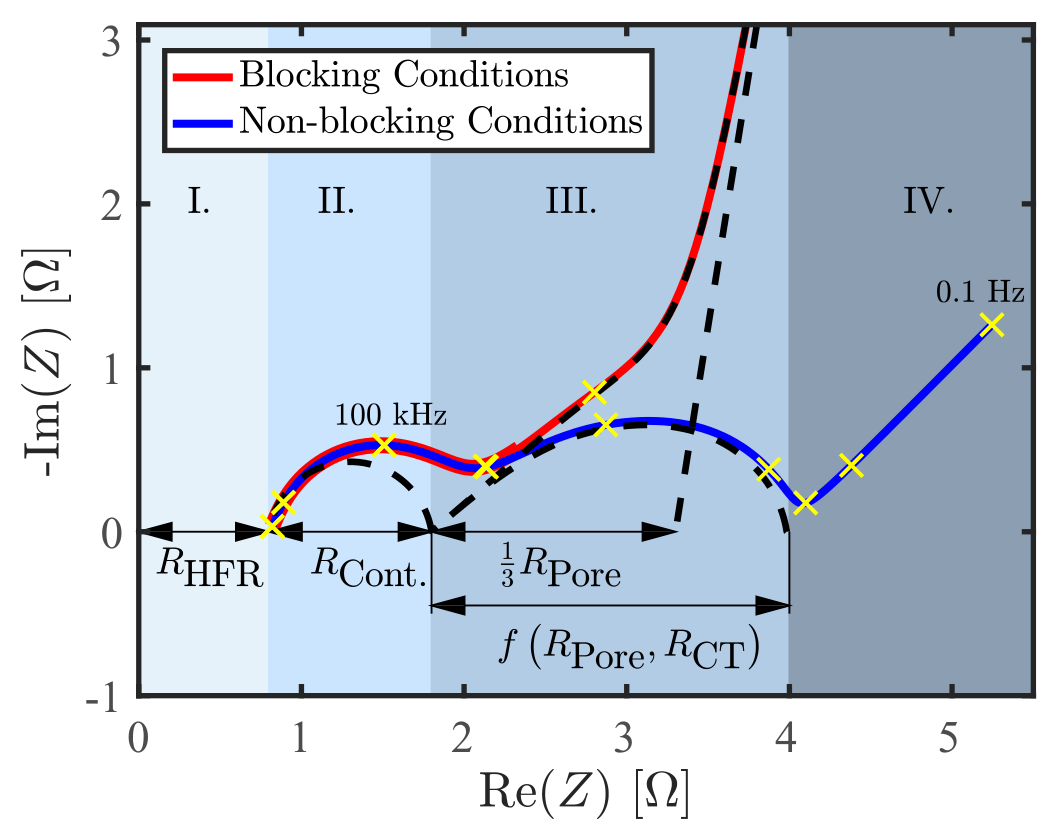
Figure 2 of Landesfeind et al., JES 164 (2017). CC BY-NC-ND 4.0, shown unchanged.
2016
-
Tortuosity Determination of Battery Electrodes and Separators by Impedance Spectroscopy
Highlights of this paper
In short
At high charge and discharge rates the battery is limited by the ionic resistance of the electrodes and separator filled with electrolyte. The key quantities are the porosity and the tortuosity. In the first part, a new impedance setup gives the tortuosities and MacMullin numbers of common separators with experimental errors below 8 %. In the second part, electrodes are measured in symmetric cells with a non-intercalating electrolyte, and a transmission-line model gives their porosity-dependent tortuosities.
Main results
- Different active materials and different conductive carbon contents were compared.
- The model agrees best with the data when constant-phase elements replace simple capacitors.
Practical meaning
- Measured tortuosities of real electrodes and separators are needed to model ohmic losses in porous battery components.

Figure 10 of Landesfeind et al., JES 163 (2016). CC BY-NC-ND 4.0, shown unchanged. -
Direct Electrochemical Determination of Thermodynamic Factors in Aprotic Binary Electrolytes
Highlights of this paper
In short
A method was proposed to determine the thermodynamic factor of salts dissolved in aprotic solvents as a function of concentration, based on cyclic voltammetry with the ferrocene couple as internal standard in a three-electrode cell. It was demonstrated for lithium perchlorate and lithium hexafluorophosphate electrolytes in carbonate solvents.
Main results
- The theory behind the relation between peak potentials and the thermodynamic factor and the non-ideal effects that distort the measurement are discussed in detail.
Note: the authors published a Comment in 2019 stating that the ferrocene-based method for the thermodynamic factor was built on an incorrect assumption and is therefore invalid. A new analysis scheme for the thermodynamic factor followed in Landesfeind and Gasteiger, 2019.
-
A Gold Micro-Reference Electrode for Impedance and Potential Measurements in Lithium Ion Batteries
Highlights of this paper
In short
To separate the contributions of anode and cathode to the impedance of a battery, a reference electrode is needed. If it is placed unfavourably, the impedance can be distorted and lead to wrong conclusions. This study presents a micro-reference electrode for Swagelok-type cells: a thin insulated gold wire between cathode and anode, alloyed in the cell with lithium.
Main results
- The lithium-gold alloy electrode is stable for more than 500 hours, also during cycling and at 40 °C, and the accuracy of the impedance measurements is validated.
- As an application, the effect of the additive vinylene carbonate (VC) was studied: the ratio of VC to active material, not the VC concentration, determines the impedance of the anode SEI.

Figure 1 of Solchenbach et al., JES 163 (2016). CC BY 4.0.